
Indian equity markets should be able to withstand inflation up to 8 per cent, said analysts at Credit Suisse Wealth Management in a recent note. Should the rate of inflation move higher than this, the valuation of Indian equities could deteriorate further, they cautioned. The fall from the peak levels has seen Nifty's 12-month forward price-to-earnings (P/E) ratio of 17.6 dip toward its 10-year and 5-year (pre-COVID) average of 16.9, which suggests that valuation froth of Indian equities has settled, said the Credit Suisse analysts.

In a first step towards succession plan, Chennai-based fast-moving consumer goods (FMCG) major CavinKare on Monday announced the restructuring of its businesses and also roped in the generation next giving charges of separate business verticals. Announcing the restructuring on Monday, CK Ranganathan, chairman and managing director of CavinKare indicated that the business will be split into mainly four different streams - FMCG, ecommerce, retail and research and development.

Price up on weak dollar and strong demand

The SIP route suits the salaried class, by matching their income flows with investment frequency.

New Delhi's timing couldn't have been worse, both for India's fledgling electric vehicle (EV) sector and prospective electric bike buyers. It was hard to miss the perfect storm brewing for India's EV industry since early 2022. On one hand, you had several accidents involving battery fires that unnerved consumers; on the other, uncertainty had crept in over subsidies.

Continuing their massive selling spree for the ninth consecutive month, foreign investors dumped Indian shares worth Rs 50,203 crore in June -- the highest net outflow in over two years -- amid aggressive rate hike by the US Federal Reserve, elevated inflation and relatively higher valuation of domestic equities. Foreign portfolio investors (FPIs) have now pulled out around Rs 2.2 lakh crore from domestic equities in the first six months of 2022 -- the highest-ever net withdrawal by them. Before that, FPIs withdrew Rs 52,987 crore in the entire 2008, data with depositories showed.

Equity indices gave up early gains to close in the red for the third session on the trot on Wednesday, weighed by selling in banking and finance counters amid inflationary pressures and persistent foreign fund outflows. A weak rupee and lacklustre global cues also kept buying sentiment in check, traders said. The 30-share BSE Sensex opened on a firm footing but failed to hold on the momentum, finishing 237.44 points or 0.41 per cent lower at 58,338.93. On similar lines, the broader NSE Nifty dipped 54.65 points or 0.31 per cent to close at 17,475.65.

Benchmark indices Sensex and Nifty retreated from over one-week highs to close lower on Wednesday due to profit booking in banking, IT and metal stocks amid weak global trends. After a two-day rally, the 30-share BSE Sensex dropped by 90.99 points or 0.16 per cent to settle at 57,806.49 in volatile trade. As many as 19 of its constituents declined while 11 advanced. The broader Nifty slipped by 19.65 points or 0.11 per cent to close at 17,213.60 with 31 of its stocks ending in the red.

In India, it is not easy to fight it out with the large banks which are nimble-footed and technology-savvy and are continuously innovating on the retail turf with newer products for customer acquisition.

Experts believe while escalation with Pakistan might not have a significant impact on trade economics, both India and China have major trade and investments in each others' economies. While the dispute might continue, it could have a temporary effect on the markets.

'An eerie similarity with 2019 inflation trajectory could now mean that the RBI and market inflation estimates could go awry.'

Titan was the top laggard in the Sensex pack, shedding 1.39 per cent, followed by HDFC, Axis Bank, Kotak Bank, HCL Tech and Tech Mahindra. On the other hand, Asian Paints, SBI, M&M, TCS, Bajaj Finserv and ICICI Bank were among the winners, spurting as much as 3.25 per cent.

In the first eight months of 2019, 70 per cent stocks in the BSE 500 universe were down. These stocks account for 94 per cent of India's total market capitalisation.

'12250 should be considered a reasonable level to re-enter into the market.'

Small-cap stocks raked in big gains in fiscal 2021-22 by giving up to 36.64 per cent returns, outshining the bigger benchmark gauge and experts believe that they may continue to outperform in FY23. Markets faced many headwinds in the latter part of the last fiscal with the emergence of geopolitical tension, inflation concerns and FII selling. Analysts said that the first half of the last fiscal was very good, while the market entered into consolidation in the second half, combined with high volatility.

After two months of buying, foreign portfolio investors (FPIs) have turned net sellers in October by pulling out Rs 12,278 crore from Indian markets. As per depositories data, FPIs took out Rs 13,550 crore from equities but invested Rs 1,272 crore in the debt segment during October 1-29. The total net outflow stood at Rs 12,278 crore during the period under review.

Despite a rise in input costs, leading car-makers refrain from hiking their price.

A slow but steady economic uptick can be seen in various segments of the economy. India's economy expanded 4.8 per cent in the second quarter, higher than the preceding quarter's 4.4 per cent.

'Think of the poorest retail investor before you decide to go for an IPO'

Net sales growth for the quarter ended December (Q3FY20) was 4.5 per cent on a year-on-year (YoY) basis for companies that have declared their results so far, compared to an 8.4 per cent rise in the first half of the financial year. This indicates that there could be a further rise in days' sales of inventory.

ITC was the top gainer in the Sensex pack, rising around 3 per cent, followed by HDFC Bank, PowerGrid, ICICI Bank, IndusInd Bank and NTPC. Nifty surged 176.80 points to a new lifetime closing high of 18,338.55.

41 companies take back shares worth Rs 27,783 crore in FY17

Equity benchmarks Sensex and Nifty halted their five-day rally on Tuesday and settled deep in the red, mirroring weak global markets, with decline in index heavyweights Reliance Industries, Infosys and HDFC Bank. Despite opening with gains of over 200 points, the 30-share Sensex turned highly volatile and tumbled 709.17 points or 1.26 per cent to close at 55,776.85. During the day, the benchmark index plunged 1,067.07 points or 1.88 per cent to 55,418.95. The broader NSE Nifty also declined 208.30 points or 1.23 per cent to close at 16,663.

Since 2016, Sebi has made many rules to prevent unauthorised trading by stockbrokers. Yet, one comes across dozens of cases of blatant overtrading in client accounts, every year, leading to massive losses to investors, observes Debashis Basu.

An emergency arbitration hearing between Amazon and retail conglomerate Future Group took place last week and a verdict is expected in the next few days, according to sources.

A yellow glow is likely to stand out amid grey geopolitical clouds in 2023, with gold price projected to touch Rs 60,000 per 10 grams in the Indian market as more investors veer towards safe-haven assets. In a year where volatility was more a norm than an exception, gold prices in the international market oscillated from a peak of $2,070 per ounce in March to a low of $1,616 per ounce in November and is steadily recovering since then, according to market experts. At the beginning of 2022, gold prices were around $1,800 an ounce.

Increasing awareness about mutual funds, ease of transactions through digitisation and sharp surge in equity markets have aided asset management companies to add a staggering 3.17 crore investor accounts in 2021-22, with experts saying the trend is likely to continue this fiscal as well. This was a significant rise from 2020-21 when 81 lakh accounts (or folios in mutual fund parlance) were opened, data with the Association of Mutual Funds in India (Amfi) showed. The ongoing financial year too appears to be promising in terms of folios as increase in investor accounts will enable people to move beyond fixed deposits and savings accounts, said Priti Rathi Gupta, founder of LXME, a financial platform for women.

Experts say Future group will look for an out-of-court settlement with help from Reliance in the Amazon matter.

Equity markets began the new financial year with smart gains on Friday, with the Sensex rallying over 708 points to recapture the crucial 59,000-mark following gains in index majors HDFC twins and Reliance Industries, along with foreign fund inflows. On the first day of trading in the new financial year, the BSE barometer rallied 708.18 points or 1.21 per cent to settle at 59,276.69. During the day, it jumped 828.11 points or 1.41 per cent to 59,396.62. The broader NSE Nifty advanced 205.70 points or 1.18 per cent to settle at 17,670.45.
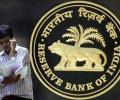
The Reserve Bank is likely to maintain status quo on interest rates in its forthcoming monetary policy review but may change the stance in view of retail inflation piercing its upper tolerance limit, global uncertainties created by the ongoing Russia-Ukraine war, and the urgency to protect and boost growth, feel experts. The RBI governor-headed rate setting panel -- Monetary Policy Committee (MPC) -- will be holding its first meeting of the 2022-23 fiscal from April 6 to 8. The outcome will be announced on April 8.

Even as raw material prices start cooling off from their peaks, fast-moving consumer goods (FMCG) companies' margins are expected to remain under pressure at least in the next quarter. This is because commodity prices continue to remain high year-on-year (YoY). Consumer companies will also continue to increase rates as they have been taking price hikes in a staggered manner. They have not yet passed the entire price increase of raw materials to consumers.

This correction has given a good entry for long-term investors. One should buy quality stocks and those with growth potential.

Foreign investors have pulled over Rs 6,400 crore from the Indian equity market in the first four trading sessions of the ongoing month when the Reserve Bank of India (RBI) and US Federal Reserve raised interest rates. Given the headwinds in terms of elevated crude prices, inflation, tight monetary policy among others, FPIs' flows in India are expected to remain volatile in the near term, Shrikant Chouhan, Head - Equity Research (Retail), Kotak Securities, said. Foreign Portfolio Investors (FPIs) remained net sellers for seven months to April 2022, withdrawing a massive amount of over Rs 1.65 lakh crore from equities. This was largely on the back of anticipation of a rate hike by the US Federal Reserve and due to the deteriorating geopolitical environment following Russia's invasion of Ukraine.

The government is expected to defer the mega initial public offering (IPO) of LIC to the next financial year as the ongoing Russia-Ukraine war has dampened fund managers' interest in the public issue, market experts said on Sunday. The government was looking to sell 5 per cent stake in Life Insurance Corporation (LIC) this month, which could have fetched over Rs 60,000 crore to the exchequer. The IPO would have helped meet the curtailed divestment target of Rs 78,000 crore this fiscal.

With the Thar, M&M has come full circle. In a market where every other vehicle has an SUV tag, the company plans to stick to its core competence of making rugged, true-blue, all-terrain SUVs, and marks a fresh beginning for the 75-year-old firm that enjoyed an indomitable position in the SUV segment till 2012, reports Shally Seth Mohile.

The rupee tumbled 19 paise to close at a fresh lifetime low of 77.93 against the US dollar on Friday as rising crude oil prices and unabated foreign capital outflows soured sentiment. A sell-off in equity markets and stronger greenback overseas also weighed on the domestic unit, forex traders said. At the interbank foreign exchange market, the local currency opened at 77.81 and witnessed an intra-day high of 77.79 and a low of 77.93 against the US dollar.

Market participants are hoping for a few tweaks on the taxation front which will encourage consumers and businesses to spend.

Quant funds have a very short track record, and have underperformed so far, reveals Sarbajeet K Sen.

A total of 49 companies raised Rs 81,615 crore in Samvat 2077, more than the preceding four years and almost double the amount raised in the previous year. Samvat 2078 appears even more promising with mega issues of Paytm and Life Insurance Corporation (LIC) of India. However, Paytm's record could be short-lived as state-owned LIC is planning to launch a Rs 1-trillion IPO by March 2022.

Flush with liquidity, banks are eager to lend. And, therein lies the problem, warns Tamal Bandyopadhyay.
 © 2026 Rediff.com - Advertise with us - Disclaimer - Privacy Policy - Sitemap - Feedback - About us - Terms of use - Grievances